A good spooky little movie. Gaslight was actually Angela Lansbury’s film debut for which she earned an Oscar nomination for Best Supporting Actress. Apparently she got the role and told the department store she worked at that she was quitting. They told her that she should disclose her new salary and maybe they could match it. She told them that she'd be making $500 a month--much more than the $65 a week she was making at the department store. They were a little surprised.
Ingrid Bergman won Best Actress Oscar and Golden Globe for her role as Paula and there were Oscar nominations for Best Actor (Charles Boyer), cinematography, picture, and screenplay. The movie won for art direction/interior decoration.
It also has Joseph Cotten as Brian Cameron (he’s the creepy Uncle Charlie in Shadow of a Doubt and was a friend of Orson Wells—his second role was the lead in Citizen Kane)
Paula (Bergman) leaves London, 9 Thornton Square (“number 9”) in particular, as a child after her aunt is mysteriously murdered and her jewels stolen. Paula was the one who found her strangled aunt (her mother had died when Paula was born and her aunt was her guardian). She’s sent to Italy to study under the singing maestro who taught her aunt. She falls in love with an older pianist (Charles Boyer) who dreams of living in London which, of course, is a bit upsetting to Paula but she decides that she can face it with Gregory as her husband. So they get married and move into number 9. Gregory is a little shady, though. He incessantly tells Paula that she’s ill and inflicts all manner of psychological games on her to convince her that she’s going mad (telling her that she loses things, is forgetful, is tired, stealing things of his, etc. when she’s not and not letting her receive any visitors). All the while Gregory seems to know more about London than he should. Gregory also hires the saucy and impertinent Nancy (Angela Lansbury) as a housemaid who Paula thinks hates her. Brian Cameron (Cotten) gets interested in the situation because he sees the resemblance between Paula and her dead aunt. He and the busybody neighbor (who loves gruesome murder mysteries) try to get to the bottom of things. The title comes from the fact that the gaslights in the house dim which Paula notices every night (at the same time there are noises in the attic) but for which there is seemingly no explanation. All is explained, of course, but not until the very last minute.
Very 1940s to be supposedly set in an era of bustle skirts—kissing in the street, Paula threatening to go out to a party on her own. But it's a good movie. A tight psychological thriller with Bergman playing crazy better than Vivian Leigh did in Streetcar (and that's a lot for me to admit).
Sunday, September 30, 2007

Saturday, September 29, 2007
Eastern Promises (2007) (nat)
Well, there's four minutes of Viggo Mortensen nude. Then there's four minutes of Viggo Mortensen nude. Then there's four minutes of what happens in this movie. And that's an entirely different thing.
So, even though Tracy is the only one who reads this and she sat next to me in the movie, the basic plot is a midwife, Naomi Watts, helps to deliver the baby of a dying 14 year old girl. Finding the family of the girl gets her involved with the Russian mob in London. Not nice guys who include Viggo, his "boss" (an appropriately slimy Vincent Cassel) and the dad of his boss who is a big player in the mob. Of course, the Russian mob is involved in the pregnancy and subsequent death of the girl and Anna (Naomi) gets herself in just a bit of danger by investigating a tad too much. Luckily, Nikolai (Viggo) has a heart and prevents her from getting in too deep. That's about all of the plot I can give away just in case there's another reader here.
There were four scenes where I covered my face. One was in anticipation of a dentistry scene that didn't appear. The four lengthy minutes of Viggo nude was another one of those scenes. I won't say what happens or when it the movie it happens just in case you don't see it coming (which you should, at least in the minute before it happens) but, oh boy, it's a scene.
It is a good movie, though. Good character development of interesting characters. Good solid plot with no noticeable holes. Respectable ending that's not too easy.
So, even though Tracy is the only one who reads this and she sat next to me in the movie, the basic plot is a midwife, Naomi Watts, helps to deliver the baby of a dying 14 year old girl. Finding the family of the girl gets her involved with the Russian mob in London. Not nice guys who include Viggo, his "boss" (an appropriately slimy Vincent Cassel) and the dad of his boss who is a big player in the mob. Of course, the Russian mob is involved in the pregnancy and subsequent death of the girl and Anna (Naomi) gets herself in just a bit of danger by investigating a tad too much. Luckily, Nikolai (Viggo) has a heart and prevents her from getting in too deep. That's about all of the plot I can give away just in case there's another reader here.
There were four scenes where I covered my face. One was in anticipation of a dentistry scene that didn't appear. The four lengthy minutes of Viggo nude was another one of those scenes. I won't say what happens or when it the movie it happens just in case you don't see it coming (which you should, at least in the minute before it happens) but, oh boy, it's a scene.
It is a good movie, though. Good character development of interesting characters. Good solid plot with no noticeable holes. Respectable ending that's not too easy.
Friday, September 28, 2007
The Brief Wondrous Life of Oscar Wao (2007) (nat)
So, I've been reading. That takes longer than watching a movie. A lot longer.
I just finished this one a few minutes ago so I don't quite have all of my thoughts on it in order or straightened out but I wanted to write at least a bit while it was still fresh. So none of this is really organized and some of it is thinking in progress.
The Brief Wondrous Life of Oscar Wao is by Junot Diaz who is a Dominican-American immigrant author. His only other major publication (besides short stories in journals and etc) is Drown, a collection of short stories published in 1996. I like Drown a lot. But not in a way that I usually like books. It's definitely an academic like--I'm not going to read it for fun--but it's also not really a plot/character like. It's a stylistic like. The short stories are all extremely violent, for the reader, and not necessarily because of gruesome acts within the story. The language is violent (but not in a active verb, curse word, yicky descriptions way). There is Spanish strewn throughout the stories. I can read Spanish fairly well, have been doing so for a long time, and, at the very least, I can use a Spanish dictionary efficiently and effectively. That only gets you so far in Drown. Not only is this the Spanish from the Dominican Republic but it's the Spanish from the streets, slang and made up colloquialisms. They can't be translated. It's one of the most effective ways of getting a white American reader to understand the immigrant experience. You can't understand it. There's no way to look it up or even to ask someone because it's a word with only an instinctual translation. And that's violent for a reader--to be pummeled with words you can't know. Anyway, another reason I bring up Drown is that Yunior, the narrator for most of Oscar Wao, is a recurring character in the stories. In short, after 11 years of no new work from Diaz, I had high expectations for Oscar Wao and I'm not 100% sure they were fulfilled.
The book jacket (we all know how reliable those can be sometimes) says: "Things have never been easy for Oscar, a sweet but disastrously overweight ghetto nerd, a New Jersey romantic who dreams of becoming the Dominican J. R. R. Tolkien and, most of all, of finding love. But he may never get what he wants, thanks to the fuku--the ancient curse that has haunted Oscar's family for generations, dooming them to prison, torture, tragic accidents, and, above all, ill-starred love. Oscar, still dreaming of his first kiss, is only its most recent victim--until the fateful summer that he decides to be its last. With dazzling energy and insight, Junot Diaz immerses us in the uproarious lives of our hero Oscar, his runaway sister Lola, and their ferocious beauty-queen mother Belicia, and in the family's epic journey from Santo Domingo to Washington Heights to New Jersey's Bergenline and back again. Rendered with uncommon warmth and humor, TBWLOW presents an astonishing vision of the contemporary American experience and the endless human capacity to persevere--and to risk it all--in the name of love."
First, I don't think anything should end with "in the name of love." I mean Diaz is a smart guy (teaches at MIT), why didn't he stop the silly book publishing people? Second, the curse isn't "ancient." It goes back three generations (including Oscar) to the grandfather he never knew. Third, this "ill-starred" love is just stupidity. Both important instances are those in which Oscar/Belicia proceed to ignore common sense and mess with the Dominican government (nasty people), the older during the reign of a dictator, for people they did not really know. Fourth, Oscar doesn't get his first kiss until page 294 of 331. Fifth, he doesn't so much "decide to be its last [victim]" as put himself in a stupid deadly situation. He's in no way defeating the fuku. No one has any idea about how to do that, if the curse even exists. Sixth, his mother was a beauty, but not a beauty-queen. Next, no one but one family member "perseveres"--Lola is the only one left standing in the end (her grandmother, maybe, but she'd old and showing it much earlier). They succumb to the fuku, their own foolishness, cancer, whatever you want to call it. But they succumb. And, finally, I don't buy that any of them did it all "in the name of love" (I mean, really, a cliche on the book jacket of what should be an important literary book). Belicia dies of cancer, no love involved there. She has an ill-advised relationship with an important member of the Trujillo regime and ends up sacrificing a lot but she gains a great deal more from the end of that relationship--a life in America and a husband (about whom we're never given any information other than he fathered Lola and Oscar and then left). Oscar dies of bull-headedness in my opinion (the same that got his mother in the disastrous mess with the regime) but, ok, there was "love" involved. But that's only after he's tried to kill himself and harbors real fantasies of trying again. So he's got some serious issues to work through. Lola sacrifices very little for love and ends up just fine and the same with the narrator/Yunior.
I'm not sure whether I like the book or not. There are some inconsistencies that concern me. The narrator's knowledge seems inconsistent to me. He uses the geek boy references that Oscar would know and use but Yunior is supposedly not that much of a geek, quite the player and a bit of a jock though apparently an English major (not apparent, though, in the narration--only in background info given). Also, there is information included that shouldn't be known and no source is given for it--what happened in a death camp (in the DR run by a government that did not keep records "like the Germans") to a man who his family was told was dead 14 years before he died and from whom no handwriting or books survive--from where exactly did that info come? And I don't care about Oscar (whose last name is really "de Leon" but a college joke about Oscar Wilde is bastardized via the Dominican accent to "Wao"). I know he's dead in the novel's present. The title tells me that much. But his life isn't so much "wondrous" and the narrator does little to make me care about him. I was much more interested in his sister (as is the narrator--he only becomes "friends" with Oscar because Lola asks him to look after Oscar while she's out of the country) and his mother, hell even the brief appearance of his grandparents and aunts interested me more. I did miss the linguistic violence of Drown. This is a much more innocuous book and the slew of geek boy references didn't have the same alienating effect as the untranslatable Spanish. Those references were fun--it's fun to hear a bad guy called a ringwraith (I also like the line: "one of those very bad men that not even postmodernism can explain away")--but they weren't the most effective thing really. I don't know. I liked them but I'm not sure they added as much as they could have to the story or characterization. I mean, you say "geek boy" and everyone gets it. Adding references to geek boy loves doesn't make him more or less of a geek boy. And since none of it is in Oscar's voice, the geek boy references seem odd coming from the narrator who isn't so much a geek boy as someone who has been briefly exposed to geek-boydom.
But for some reason the book intrigues me. It's not bad despite my litany of flaws. It's well written and I wasn't compelled to toss it aside, to relegate it to the "I'm not reading this" pile. I kept reading it and I'm more or less satisfied with the progress and ending, although I wish it has ended about 3 pages earlier than it did. I'm intrigued by the mythology of the mongoose that pops up as well as the repeated imagery of a man with no face (there's a story in Drown titled "No Face" that I'd like to revisit now). And I think it would be an interesting juxtaposition to Breath, Eyes, Memory by Edwidge Danticat (who is Haitian and friends with Diaz, his "querida hermana" according to the acknowledgments) because they both contain some brutal violence against women involving cane fields. But I'm still not sure about it. I'm going to have to think about it more.
Once last issue, I could have done without the 4 pages of acknowledgments. Really. Thank fewer people, it will mean more.
Someone should read it, though, and talk to me about it.
I just finished this one a few minutes ago so I don't quite have all of my thoughts on it in order or straightened out but I wanted to write at least a bit while it was still fresh. So none of this is really organized and some of it is thinking in progress.
The Brief Wondrous Life of Oscar Wao is by Junot Diaz who is a Dominican-American immigrant author. His only other major publication (besides short stories in journals and etc) is Drown, a collection of short stories published in 1996. I like Drown a lot. But not in a way that I usually like books. It's definitely an academic like--I'm not going to read it for fun--but it's also not really a plot/character like. It's a stylistic like. The short stories are all extremely violent, for the reader, and not necessarily because of gruesome acts within the story. The language is violent (but not in a active verb, curse word, yicky descriptions way). There is Spanish strewn throughout the stories. I can read Spanish fairly well, have been doing so for a long time, and, at the very least, I can use a Spanish dictionary efficiently and effectively. That only gets you so far in Drown. Not only is this the Spanish from the Dominican Republic but it's the Spanish from the streets, slang and made up colloquialisms. They can't be translated. It's one of the most effective ways of getting a white American reader to understand the immigrant experience. You can't understand it. There's no way to look it up or even to ask someone because it's a word with only an instinctual translation. And that's violent for a reader--to be pummeled with words you can't know. Anyway, another reason I bring up Drown is that Yunior, the narrator for most of Oscar Wao, is a recurring character in the stories. In short, after 11 years of no new work from Diaz, I had high expectations for Oscar Wao and I'm not 100% sure they were fulfilled.
The book jacket (we all know how reliable those can be sometimes) says: "Things have never been easy for Oscar, a sweet but disastrously overweight ghetto nerd, a New Jersey romantic who dreams of becoming the Dominican J. R. R. Tolkien and, most of all, of finding love. But he may never get what he wants, thanks to the fuku--the ancient curse that has haunted Oscar's family for generations, dooming them to prison, torture, tragic accidents, and, above all, ill-starred love. Oscar, still dreaming of his first kiss, is only its most recent victim--until the fateful summer that he decides to be its last. With dazzling energy and insight, Junot Diaz immerses us in the uproarious lives of our hero Oscar, his runaway sister Lola, and their ferocious beauty-queen mother Belicia, and in the family's epic journey from Santo Domingo to Washington Heights to New Jersey's Bergenline and back again. Rendered with uncommon warmth and humor, TBWLOW presents an astonishing vision of the contemporary American experience and the endless human capacity to persevere--and to risk it all--in the name of love."
First, I don't think anything should end with "in the name of love." I mean Diaz is a smart guy (teaches at MIT), why didn't he stop the silly book publishing people? Second, the curse isn't "ancient." It goes back three generations (including Oscar) to the grandfather he never knew. Third, this "ill-starred" love is just stupidity. Both important instances are those in which Oscar/Belicia proceed to ignore common sense and mess with the Dominican government (nasty people), the older during the reign of a dictator, for people they did not really know. Fourth, Oscar doesn't get his first kiss until page 294 of 331. Fifth, he doesn't so much "decide to be its last [victim]" as put himself in a stupid deadly situation. He's in no way defeating the fuku. No one has any idea about how to do that, if the curse even exists. Sixth, his mother was a beauty, but not a beauty-queen. Next, no one but one family member "perseveres"--Lola is the only one left standing in the end (her grandmother, maybe, but she'd old and showing it much earlier). They succumb to the fuku, their own foolishness, cancer, whatever you want to call it. But they succumb. And, finally, I don't buy that any of them did it all "in the name of love" (I mean, really, a cliche on the book jacket of what should be an important literary book). Belicia dies of cancer, no love involved there. She has an ill-advised relationship with an important member of the Trujillo regime and ends up sacrificing a lot but she gains a great deal more from the end of that relationship--a life in America and a husband (about whom we're never given any information other than he fathered Lola and Oscar and then left). Oscar dies of bull-headedness in my opinion (the same that got his mother in the disastrous mess with the regime) but, ok, there was "love" involved. But that's only after he's tried to kill himself and harbors real fantasies of trying again. So he's got some serious issues to work through. Lola sacrifices very little for love and ends up just fine and the same with the narrator/Yunior.
I'm not sure whether I like the book or not. There are some inconsistencies that concern me. The narrator's knowledge seems inconsistent to me. He uses the geek boy references that Oscar would know and use but Yunior is supposedly not that much of a geek, quite the player and a bit of a jock though apparently an English major (not apparent, though, in the narration--only in background info given). Also, there is information included that shouldn't be known and no source is given for it--what happened in a death camp (in the DR run by a government that did not keep records "like the Germans") to a man who his family was told was dead 14 years before he died and from whom no handwriting or books survive--from where exactly did that info come? And I don't care about Oscar (whose last name is really "de Leon" but a college joke about Oscar Wilde is bastardized via the Dominican accent to "Wao"). I know he's dead in the novel's present. The title tells me that much. But his life isn't so much "wondrous" and the narrator does little to make me care about him. I was much more interested in his sister (as is the narrator--he only becomes "friends" with Oscar because Lola asks him to look after Oscar while she's out of the country) and his mother, hell even the brief appearance of his grandparents and aunts interested me more. I did miss the linguistic violence of Drown. This is a much more innocuous book and the slew of geek boy references didn't have the same alienating effect as the untranslatable Spanish. Those references were fun--it's fun to hear a bad guy called a ringwraith (I also like the line: "one of those very bad men that not even postmodernism can explain away")--but they weren't the most effective thing really. I don't know. I liked them but I'm not sure they added as much as they could have to the story or characterization. I mean, you say "geek boy" and everyone gets it. Adding references to geek boy loves doesn't make him more or less of a geek boy. And since none of it is in Oscar's voice, the geek boy references seem odd coming from the narrator who isn't so much a geek boy as someone who has been briefly exposed to geek-boydom.
But for some reason the book intrigues me. It's not bad despite my litany of flaws. It's well written and I wasn't compelled to toss it aside, to relegate it to the "I'm not reading this" pile. I kept reading it and I'm more or less satisfied with the progress and ending, although I wish it has ended about 3 pages earlier than it did. I'm intrigued by the mythology of the mongoose that pops up as well as the repeated imagery of a man with no face (there's a story in Drown titled "No Face" that I'd like to revisit now). And I think it would be an interesting juxtaposition to Breath, Eyes, Memory by Edwidge Danticat (who is Haitian and friends with Diaz, his "querida hermana" according to the acknowledgments) because they both contain some brutal violence against women involving cane fields. But I'm still not sure about it. I'm going to have to think about it more.
Once last issue, I could have done without the 4 pages of acknowledgments. Really. Thank fewer people, it will mean more.
Someone should read it, though, and talk to me about it.
Wednesday, September 26, 2007
Yay! Book Quiz
So I haven't watched any movies or read any books (I did read three weeks worth of The Chronicle but that's no fun to blog about) but I took a little "what book are you quiz" that was fun. I love the idea of the book but think the "interpretative" part leaves a bit to be desired. Here are my results:

You're Ulysses!
by James Joyce
Most people are convinced that you don't make any sense, but compared to what else you could say, what you're saying now makes tons of sense. What people do understand about you is your vulgarity, which has convinced people that you are at once brilliant and repugnant. Meanwhile you are content to wander around aimlessly, taking in the sights and sounds of the city. What you see is vast, almost limitless, and brings you additional fame. When no one is looking, you dream of being a Greek folk hero.
Odd. Anway, you can take the quiz here: http://bluepyramid.org/ia/bquiz.htm
There are other quizzes too (oddly, the state quiz said I was North Carolina) but they aren't all that fun.
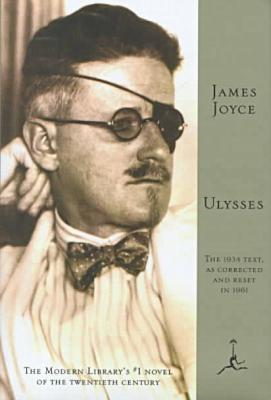
You're Ulysses!
by James Joyce
Most people are convinced that you don't make any sense, but compared to what else you could say, what you're saying now makes tons of sense. What people do understand about you is your vulgarity, which has convinced people that you are at once brilliant and repugnant. Meanwhile you are content to wander around aimlessly, taking in the sights and sounds of the city. What you see is vast, almost limitless, and brings you additional fame. When no one is looking, you dream of being a Greek folk hero.
Odd. Anway, you can take the quiz here: http://bluepyramid.org/ia/bquiz.htm
There are other quizzes too (oddly, the state quiz said I was North Carolina) but they aren't all that fun.
Sunday, September 23, 2007
Forbidden Planet (1956) (nat)
B—OR—ING! I’m not the biggest fan of sci-fi in that I don’t seek it out but I do like it when it’s well done and doesn’t break it’s own rules. Forbidden Planet is the sci-fi film that changed the genre—apparently taking it away from stupid scripts and bad special effects. I hope there aren’t any earlier sci-fi movies on the list because if this is the more “literate” script, I’m going to really hate the more poorly written ones. It’s not a good sign when less than 15 minutes into the movie, I’m online looking on IMDB to see the length (luckily a short 98 minutes), or that 1/3 of the way in, I wasn’t the least bit interested.
The plot is that a crew landed on the planet Altair to search for survivors of a crew that went there 20 years earlier. They find that there are no survivors except Dr. Edward Morbius (if that’s not a name for a villain, I don’t know what is). He has little explanation for how everyone but he and his wife died except that they were ripped limb from limb by some unknown force. His wife died of natural causes but not before they had a daughter, Altaira, who is, of course, blonde and hot. The commander, John J. Adams (a very young Leslie Nielson), and his two lieutenants along with other crewmembers (including a very young Richard Anderson) stay to investigate (despite not so veiled threats from Morbius). Meanwhile, one of the lieutenants tries to seduce the daughter with “old customs” without which “you can’t be in tip-top shape” like kisses to which she responds “is that all there is to it?” and “I haven’t noticed the least bit of stimulation” much to the chagrin of the commander (who, of course, later gets the girl). She has none of Earth humans’ scruples like wearing clothing while swimming or wearing an opaque dress longer than a shirt when visiting a ship full of lonely young men. And we can’t forget Robby the Robot who was later in everything from episodes of “Mork and Mindy,” “The Man from U.N.C.L.E.,” and “Lost in Space” to Gremlins and Earth Girls Are Easy. A race of aliens, pre-dating humans, the Krells, have gone extinct from the planet. They were, of course, far far ahead of humans in terms of technology, logic, knowledge, intelligence, ethics, etc. They left behind a “plastic educator,” which measures and teaches knowledge and on whose scale the mere humans barely make a mark. But there’s a monster loose on the planet . . . . . an invisible monster (that is sometimes red sketchy) . . . . . . it has something to do with the id . . . . . . ooooooooh. Still not that interesting.
It’s also apparently based on The Tempest. I’d suggest you just grab your Riverside and read the play.
The plot is that a crew landed on the planet Altair to search for survivors of a crew that went there 20 years earlier. They find that there are no survivors except Dr. Edward Morbius (if that’s not a name for a villain, I don’t know what is). He has little explanation for how everyone but he and his wife died except that they were ripped limb from limb by some unknown force. His wife died of natural causes but not before they had a daughter, Altaira, who is, of course, blonde and hot. The commander, John J. Adams (a very young Leslie Nielson), and his two lieutenants along with other crewmembers (including a very young Richard Anderson) stay to investigate (despite not so veiled threats from Morbius). Meanwhile, one of the lieutenants tries to seduce the daughter with “old customs” without which “you can’t be in tip-top shape” like kisses to which she responds “is that all there is to it?” and “I haven’t noticed the least bit of stimulation” much to the chagrin of the commander (who, of course, later gets the girl). She has none of Earth humans’ scruples like wearing clothing while swimming or wearing an opaque dress longer than a shirt when visiting a ship full of lonely young men. And we can’t forget Robby the Robot who was later in everything from episodes of “Mork and Mindy,” “The Man from U.N.C.L.E.,” and “Lost in Space” to Gremlins and Earth Girls Are Easy. A race of aliens, pre-dating humans, the Krells, have gone extinct from the planet. They were, of course, far far ahead of humans in terms of technology, logic, knowledge, intelligence, ethics, etc. They left behind a “plastic educator,” which measures and teaches knowledge and on whose scale the mere humans barely make a mark. But there’s a monster loose on the planet . . . . . an invisible monster (that is sometimes red sketchy) . . . . . . it has something to do with the id . . . . . . ooooooooh. Still not that interesting.
It’s also apparently based on The Tempest. I’d suggest you just grab your Riverside and read the play.
Vertigo (1958) (nat)
No. I’d never seen Vertigo. At least never all of it, or from the beginning. And I’ve still not seen Psycho. I think everyone has seen it but me but the basic plot: Jimmy Stewart is John “Scottie” Ferguson (not sure how you get Scottie from John but whatever) a detective with vertigo (San Fran couldn’t be a good place to have that with all of the hills) who is commissioned by an old college friend to follow his wife, Madeline (Kim Novak as the typical Hitchcock icy blonde). It seems she’s acting a little odd and the husband wants to know what’s going on. Madeline goes all over San Francisco with Scottie in pursuit in her apparent obsession with her dead great-grandmother, Carlotta Valdes. She doesn’t talk until about an hour in (hard to tell thanks to the commercials) but Scottie becomes more than a bit obsessed with her as she gets stranger and stranger. Meanwhile, Midge, who has been friends with Scottie since college and harbors a serious unrequited crush, sort-of hovers in the background as he pursues the mad woman but she disappears as Scottie really needs saving.
I am not a fan of the psychedelic color-changing dream sequence in the middle of the movie—just seems a bit overwrought and contrived. I thought the whole movie a bit tedious in that it seemed longer than the suspense could maintain (that could also be a symptom of the commercial breaks rather than the movie itself but it still seemed much longer than its two hour run time). This could have also been broken a bit because of the simple “cultural knowledge” of the movie’s plot. I sort of knew what happened—just not quite the details of it all. And he loves her but doesn’t know her at all and I find that incredibly frustrating and disconcerting every time it pops up in a movie. I’d like a little more character development to show why this otherwise seemingly rational man has fallen for a wacko, albeit a pretty wacko but a wacko nonetheless who more or less makes him an even bigger wacko than she is. It’s quite a warped Pygmalion story (well, not that Pygmalion isn’t already warped). And what about the nun makes her jump? Odd. This one isn’t terrible but there are movies I like much better from this director and from these actors.
I do love the shots of “driving” in old movies. I mean who really needs to move the steering wheel that much at that slow a pace? Also, this movie makes me want to watch Bell, Book, and Candle another Stewart/Novak movie (from the same year as Vertigo) in which she’s a witch who wants to get him away from his fiancée just for meanness but ends up falling for him . . . . another movie that’s not in the book. Let’s start a list of movies that should be on the list.
And now the commercials on AMC have switched to the “after hours” products . . . . “ExtenZe” (“it made me . . . he he he. . . a hell of a lot bigger”), “get connected to local hotties tonight” (because gorgeous models are just lolling around in their skimpiest lingerie waiting to get your phone call), “text flirt” (you even get a “free icebreaker”) . . . . . interspersed with ads for antacids and insurance . . . . . and followed by sleep aid ads around 3:30am . . . . that could be a fun analytical project. Oh well, off to bed to have what I’m sure will be interesting dreams after two Hitchcock films and more cheesecake than I should have eaten.
I am not a fan of the psychedelic color-changing dream sequence in the middle of the movie—just seems a bit overwrought and contrived. I thought the whole movie a bit tedious in that it seemed longer than the suspense could maintain (that could also be a symptom of the commercial breaks rather than the movie itself but it still seemed much longer than its two hour run time). This could have also been broken a bit because of the simple “cultural knowledge” of the movie’s plot. I sort of knew what happened—just not quite the details of it all. And he loves her but doesn’t know her at all and I find that incredibly frustrating and disconcerting every time it pops up in a movie. I’d like a little more character development to show why this otherwise seemingly rational man has fallen for a wacko, albeit a pretty wacko but a wacko nonetheless who more or less makes him an even bigger wacko than she is. It’s quite a warped Pygmalion story (well, not that Pygmalion isn’t already warped). And what about the nun makes her jump? Odd. This one isn’t terrible but there are movies I like much better from this director and from these actors.
I do love the shots of “driving” in old movies. I mean who really needs to move the steering wheel that much at that slow a pace? Also, this movie makes me want to watch Bell, Book, and Candle another Stewart/Novak movie (from the same year as Vertigo) in which she’s a witch who wants to get him away from his fiancée just for meanness but ends up falling for him . . . . another movie that’s not in the book. Let’s start a list of movies that should be on the list.
And now the commercials on AMC have switched to the “after hours” products . . . . “ExtenZe” (“it made me . . . he he he. . . a hell of a lot bigger”), “get connected to local hotties tonight” (because gorgeous models are just lolling around in their skimpiest lingerie waiting to get your phone call), “text flirt” (you even get a “free icebreaker”) . . . . . interspersed with ads for antacids and insurance . . . . . and followed by sleep aid ads around 3:30am . . . . that could be a fun analytical project. Oh well, off to bed to have what I’m sure will be interesting dreams after two Hitchcock films and more cheesecake than I should have eaten.
Saturday, September 22, 2007
Shadow of a Doubt (1943) (nat)
The definition of “creepy uncle.” Charlie (fem.) Newton (a brunette! in a Hitchcock!) is niece to Charlie (masc.) Oakley. The latter comes to visit his sister’s (Emma, who is just a bit dim and infatuated with her baby brother) family (which includes Charlie (fem.)) after an interesting episode in which he outwits two men who want to see him—he says to himself that they have nothing on him. Dum dum dum. Foreshadowing? Perhaps. The family also includes the dad (Joe) who reads just a few too many murder mysteries, a daughter (Anne) that puts the precocious in precocious children who reads too much above her age level (Ivanhoe), and a son (Roger) who is just a little obnoxious in an exasperating way, and Herbert, Joe’s friend who likes to dabble in crime fiction in a way that’s a little too tangible (what he could put in coffee, mushrooms which could kill someone, etc). Throughout the whole movie is an odd and way creepy sexual tension between the Charlies. Charlie (masc.) is a bit testy and very secretive, taking random pages out the evening paper and not wanting his photo taken and doesn’t want to be involved in a survey being taken by two men (of course, suspenseful music tells us this is odd behavior). Those men (surprise!) aren’t survey takers but are detectives looking for “a man” in connection with the “Merry Widow Murderer” who strangles rich women. Charlie (fem.) gets involved with one of the detectives and, as a consequence, become suspicious of her funny-acting uncle (but not due to the off-putting sexual tension). It doesn’t help that Charlie (masc.) is a tad creepy and has a whole monologue about widows and his contempt for them. Suspense and danger ensue . . . .
Strangely interspersed throughout the scenes is a cut to couples in ball gowns and tuxedos dancing. I’m guessing this is connected to the fact that Charlie (fem.) hums the “Merry Widow Waltz” to which Charlie (masc.) reacts negatively, not allowing anyone to come to any definite conclusion about its title when Charlie (fem.) mentions the song being stuck in her head. And then later Charlie (fem.) gets testy when her mother hums the same song.
Overall a good movie in the Hitchcock tradition. An annoyance of a different sort, after being spoiled by my beloved Turner Classic Movies, this one was on American Movie Classics, which doesn’t do the informative introductions to the movies and has, gasp, commercials! Nothing like watching a movie that’s supposed to be suspenseful to have it interrupted several times for ads about credit cards, retirement plans, and flat screen TVs (and the switch from black and white to color is a bit jarring).
Strangely interspersed throughout the scenes is a cut to couples in ball gowns and tuxedos dancing. I’m guessing this is connected to the fact that Charlie (fem.) hums the “Merry Widow Waltz” to which Charlie (masc.) reacts negatively, not allowing anyone to come to any definite conclusion about its title when Charlie (fem.) mentions the song being stuck in her head. And then later Charlie (fem.) gets testy when her mother hums the same song.
Overall a good movie in the Hitchcock tradition. An annoyance of a different sort, after being spoiled by my beloved Turner Classic Movies, this one was on American Movie Classics, which doesn’t do the informative introductions to the movies and has, gasp, commercials! Nothing like watching a movie that’s supposed to be suspenseful to have it interrupted several times for ads about credit cards, retirement plans, and flat screen TVs (and the switch from black and white to color is a bit jarring).
Subscribe to:
Posts (Atom)